


“The Case for Keith Hernandez and the Hall of Fame’s Blind Spot at First Base”
- Jason Fink

- Apr 27
- 4 min read
Updated: Apr 28

By: Jason Fink
According to the Baseball Writers; Association of America’s criteria, “voting shall be
based upon the player’s record, playing ability, integrity, sportsmanship, character
and contribution to the team(s) on which the player played.”
Notice what’s missing.
There’s no mention of needing inflated power numbers at a certain position.
Nothing about 3,000 hits or other milestone-driven benchmarks. And yet, those are
exactly the standards that have come to define Hall of Fame debates.
Which brings us to a player still on the outside of Cooperstown looking in: Keith
Hernandez.
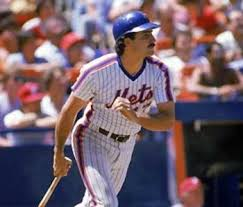
Hernandez isn’t just a Hall of Fame snub; he’s a casualty of a narrow definition of
greatness. He built a career defined by consistent excellence, but because he played
first base, he’s been measured against an unofficial standard that prioritizes one
thing above all else: power.
If that’s the bar, then it raises a larger question; one voters haven’t fully answered:
Why have players already in Cooperstown been granted more flexibility than those
still waiting?
If the Hall of Fame is going to operate under the unofficial standard of 3,000 hits,
500 home runs, 1,500 RBIs for first basemen, it should at least apply that standard
consistently.
It hasn’t.
There are players in Cooperstown who didn’t come close to those numbers, and yet
they were enshrined regardless.
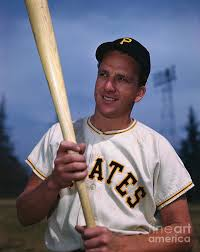
Take Ralph Kiner of the Pittsburgh Pirates for instance. Sure he led the National
League in home runs for seven straight seasons. Phenomenal. But guess what he
didn’t do? Kiner didn’t come close to 3,000 hits, hit close to 500 home runs, or win a
Most Valuable Player award. He also didn’t have a playoff resume. Unfortunately,
Kiner played for some very bad Pirate and Chicago Cubs teams and never had a shot
to make the postseason. He finished his career with a .279 batting average, 1,451
hits, 369 home runs, and 1,015 RBIs.
Then you have George Kelly. Kelly played first base for a majority of his 16-year
career for the New York Giants, Pittsburgh Pirates, Cincinnati Reds, Chicago Cubs
and Brooklyn Dodgers. Over the course of his career, he hit .297 with 1,778 hits, 148
home runs, and 1,020 RBIs. Again, not staggering numbers but he’s in the Hall.

Which brings me to Frank Chance. If you’re a baseball history geek like myself, then
you know the famous Chicago Cubs trio of Tinker to Evers to Chance. It was like
Ozzie to Herr to Hernandez in 1982 or Ozzie to Herr to Clark in 1985. Chance was a
very good hitting first baseman who played in the dead ball era. He made Ozzie
Smith look like Babe Ruth with his power numbers. Chance finished with a paltry 20
home runs over a 17-year career to go along with 1,274 hits, 596 RBIs, and a .296
career batting average. You know who else had a .296 career batting average?
Keith Hernandez. Owner of an MVP award (he shared it with Willie Stargell in
1979), a batting title, 11 consecutive Gold Glove Awards, and two World Series
championships, Hernandez demonstrated what a real field general looked like. He
wasn’t supposed to redefine first base. When he broke into the league with the St.
Louis Cardinals in 1974, the position was already being shaped by power hitters;
players whose value was measured in home runs and RBIs. Hernandez took a
different path.
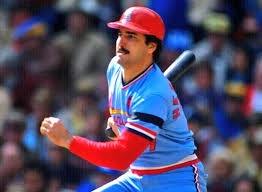
He became one of the most complete and well-rounded players of his era. He didn’t
just hit, he controlled the game. Over the course of his 17-year career between the
St. Louis Cardinals and New York Mets, Hernandez built a profile that modern
analytics would fully appreciate:
Career .296 batting average
.384 on-base percentage
One of the best situational hitters of his time
And then there’s the defense. I mentioned the 11 consecutive Gold Gloves from 1978
to 1988. His footwork, positioning, and ability to turn errant throws into outs didn’t
just prevent errors, they changed out the position was played.
Pitchers trusted him more than their catcher. Infielders relied on him. Games were
won because of him.

And in New York, he became something ever more valuable; a leader. Hernandez
helped an up and coming Mets team into a championship club in 1986, setting a tone
that defined one of the most iconic teams in baseball history.
What separates Hernandez from many of his contemporaries isn’t just what he did,
it’s how he did it. He didn’t fit the traditional mold of a Hall of Fame first baseman.
He wasn’t a 500-home run slugger. He didn’t chase power numbers. He finished his
career with 2,182 hits, 162 home runs, and 1,071 RBIs. His value wasn’t just
confined to the batter’s box though.
Instead, he excelled in areas that were often overlooked: getting on base, controlling
at-bats, saving runs defensively, and elevating the players around him. Keith
Hernandez didn’t just play first base; he expanded what the position could be. The
problem is, the Hall of Fame hasn’t fully grasped that yet.


Comments